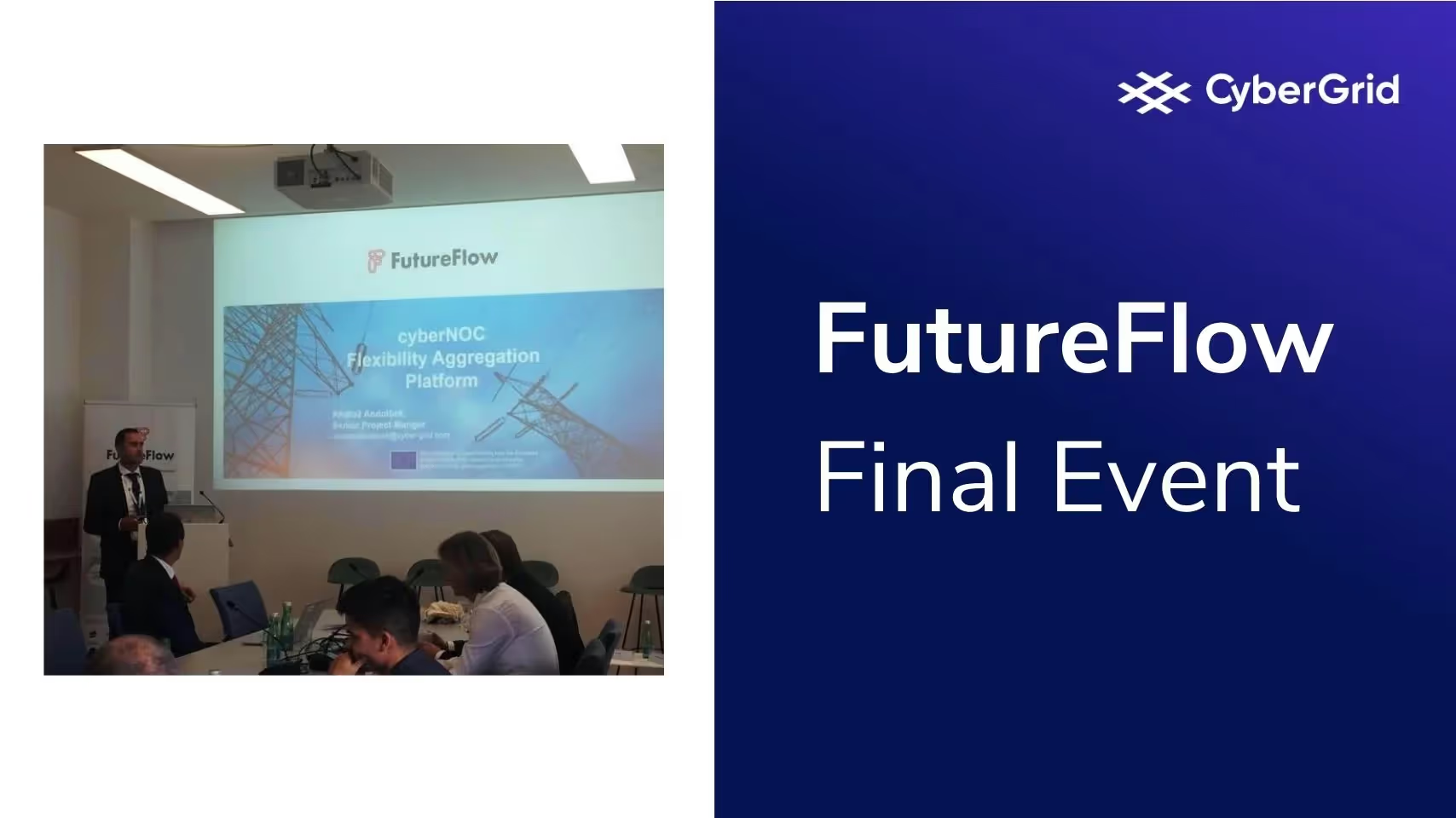
CyberGrid played a central role in the successful use of flexible capacity for different energy markets, as demonstrated in the European-wide H2020 project FutureFlow. The 15th of October of 2019, the FutureFlow project held its final event in Vienna at the Energy Community Secretariat. During the event, we presented quantifiable results from pilot tests.
In the four-year implementation period, the FutureFlow consortium engaged in R&D activities to validate that consumers and distributed generators can be empowered to provide balancing and redispatching services within an attractive business environment. It is crucial to regulate the balance of the network by adding flexibility services since electricity generation has increasingly become sourced by variable, renewable energy, while fossil plants are becoming less attractive.
Empowering consumers in the energy market
Consumers can engage as the new guardians of the power network – DR (Distributed Resources) & DGs (Distributed Generation). The FutureFlow project results show that by contributing reliable sources of flexibility, consumers will play an important role in the future. At the final event, CyberGrid’s project manager for FutureFlow, Andraz Andolsek presented the part of CyberGrid's modular flexibility aggregation platform CyberNoc. CyberNoc leveraged the flexible capacity for different markets, solved imbalances, and addressed grid stability issues for the FutureFlow project. To make use of the many changes ongoing in the energy sector, FutureFlow sought to design eTrading solutions for electricity balancing and redispatching in Europe by linking interconnected control areas of four Transmission System Operators (TSO) of Central-South Europe, where transmission system security has been an issue to be solved.
Empowering consumers to actively participate in and benefit from energy markets was thus declared a pivotal vehicle for solving grid imbalances. “With the help of consumers and prosumers alike, the EU is successfully moving towards the decarbonization of the region by investing in quantifiable projects to promote the use of renewables. In addition, consumers see their household’s contributions by way of smaller electricity bills and the satisfaction of helping to tackle climate change.”, Andraž Andolšek, CyberGrid’s Project Manager explains.


Over 2018, CyberGrid’s scalable ICT platform was tested for consumer-compatibility in cross-border pilot tests between 4 TSOs and real-life consumers/prosumers gathered from those 4 control zones, i.e Slovenia, Austria, Hungary and Romania. The pilot tests have successfully demonstrated that consumers/prosumers are able to contribute reliable balancing services to the TSOs. Active consumers can thus help TSOs to ensure uninterrupted power supply while also monetizing their contribution.